THE FIRST RAILWAY
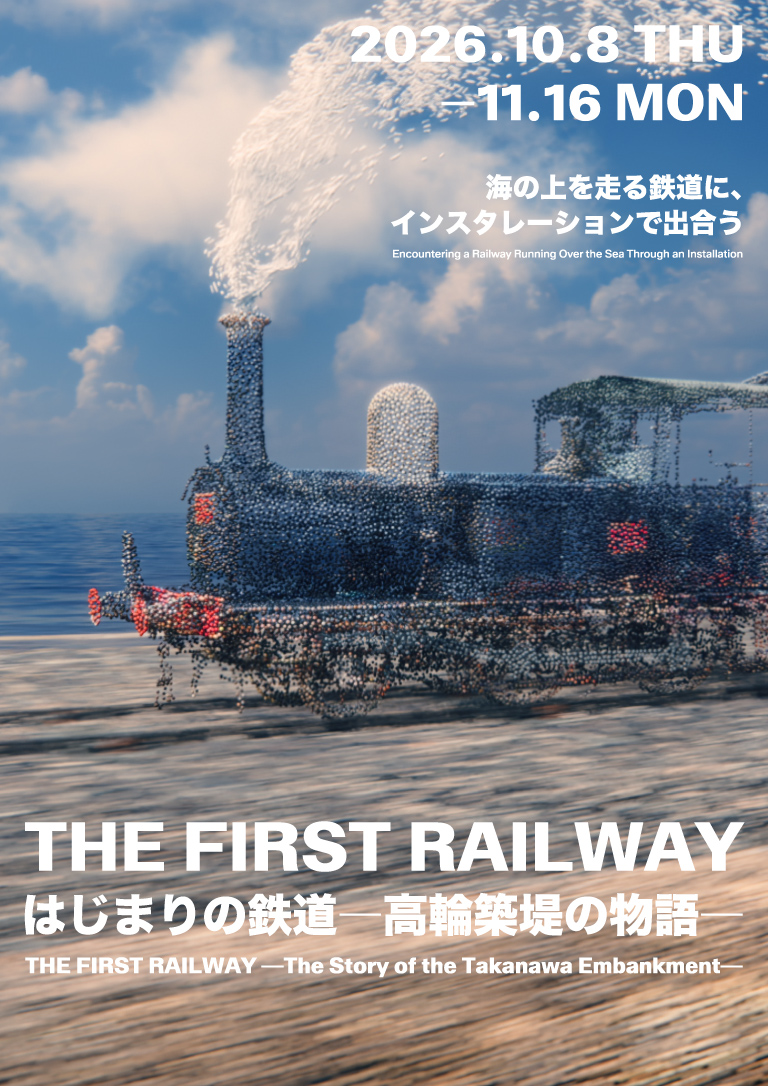
—The Story of Takanawa Embankment- Schedule
- October 8, 2026 THU.- November 16, 2026 MON.
- Venue
- Box300
- Fee
- Free
Concept
If it can't be built on land, then build it on the sea. An exhibition that showcases the innovative spirit Takanawa Embankment, born from a shift in perspective, and the innovative spirit that thrives within it.
In 1869, the construction of Japan's first railway was decided. The tracks were to be laid from Shinbashi to Yokohama. However, construction of the tracks around Takanawa Beach, the intermediate point, was met with strong opposition and did not progress. This led to the idea of "building the tracks over the sea." As a result, Takanawa Embankment was built over what was then Tokyo Bay, and the railway opened in 1872 (though there are various theories). This exhibition expresses the innovative spirit that made the railway opening possible through large-scale video projections using the latest technology and installations of excavated artifacts. It is being held as part of "THE FIRST RAILWAY PROJECT," which aims to pass on the history and memory of the railway to the future.
Event Overview
- Schedule
-
THU., October 8, 2026 – Monday, November 16 MON. 2026
- Time
-
10:00 AM - 7:00 PM (until 9:00 PM on Fridays and Saturdays)
- Venue
-
Box300 (Floor Map)
- Hosted by
-
MoN Takanawa: The Museum of Narratives
- Cooperation
-
East Japan Railway Company, Agency for Cultural Affairs, Tokyo Metropolitan Board of Education
*The video work "Locomotive Running on the Sea" was produced using the Agency for Cultural Affairs' "Vibrant History! Comprehensive Utilization and Development Project for Historical Sites, etc."
Highlights
Experience the scene of Japan's first railway running on a large screen.
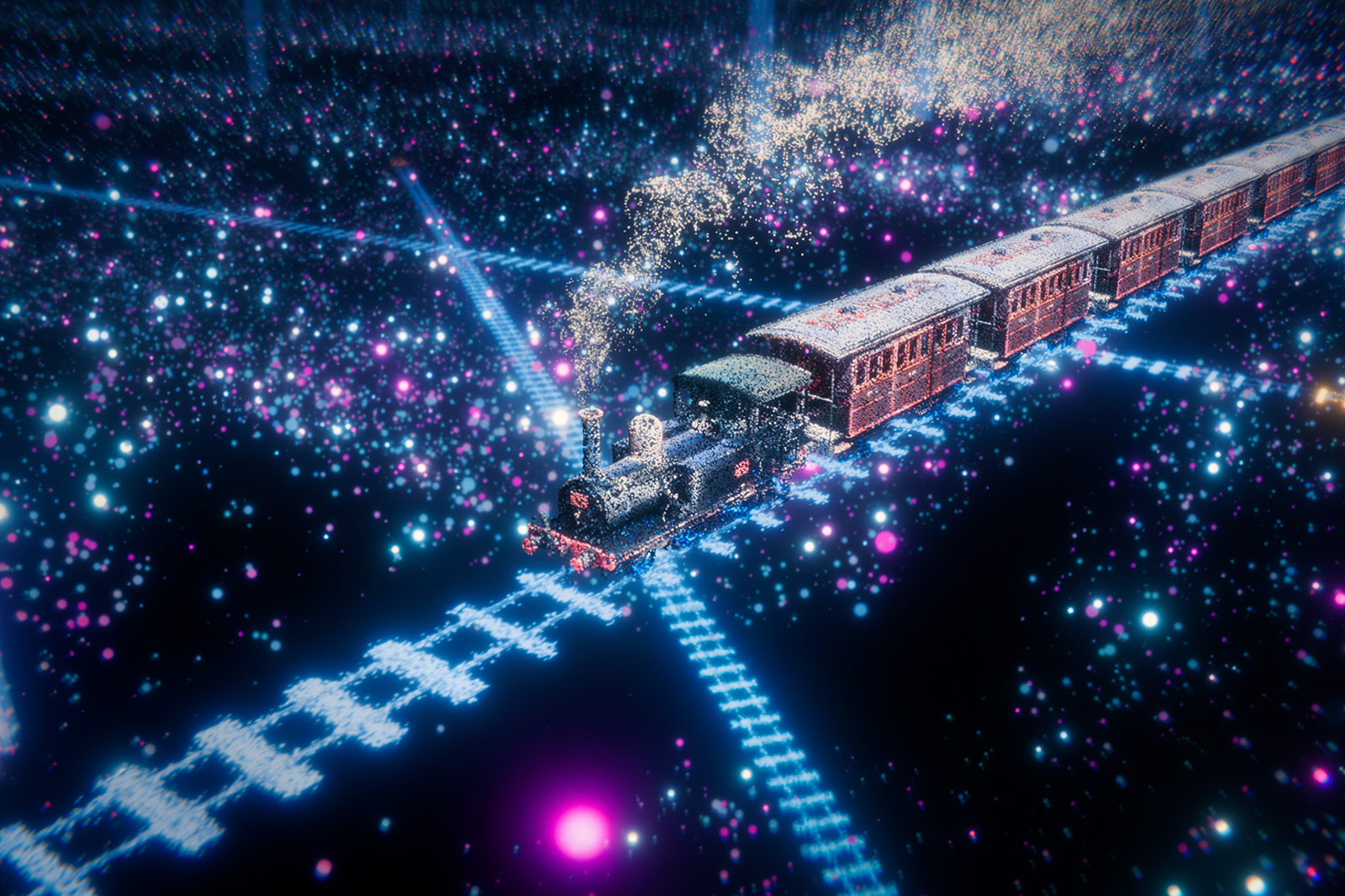
The centerpiece of this exhibition is "Locomotive Running on the Sea," a video work utilizing Point Cloud Data collected during the excavation of Takanawa Embankment. It beautifully depicts the railway that once ran on this land continuing into the future, accompanied by emotionally rich music. The video, projected onto the walls of Venue, conveys the history of the railway and the innovative spirit of Meiji Japan with a strong sense of realism.
The excavated historical materials are also on display.
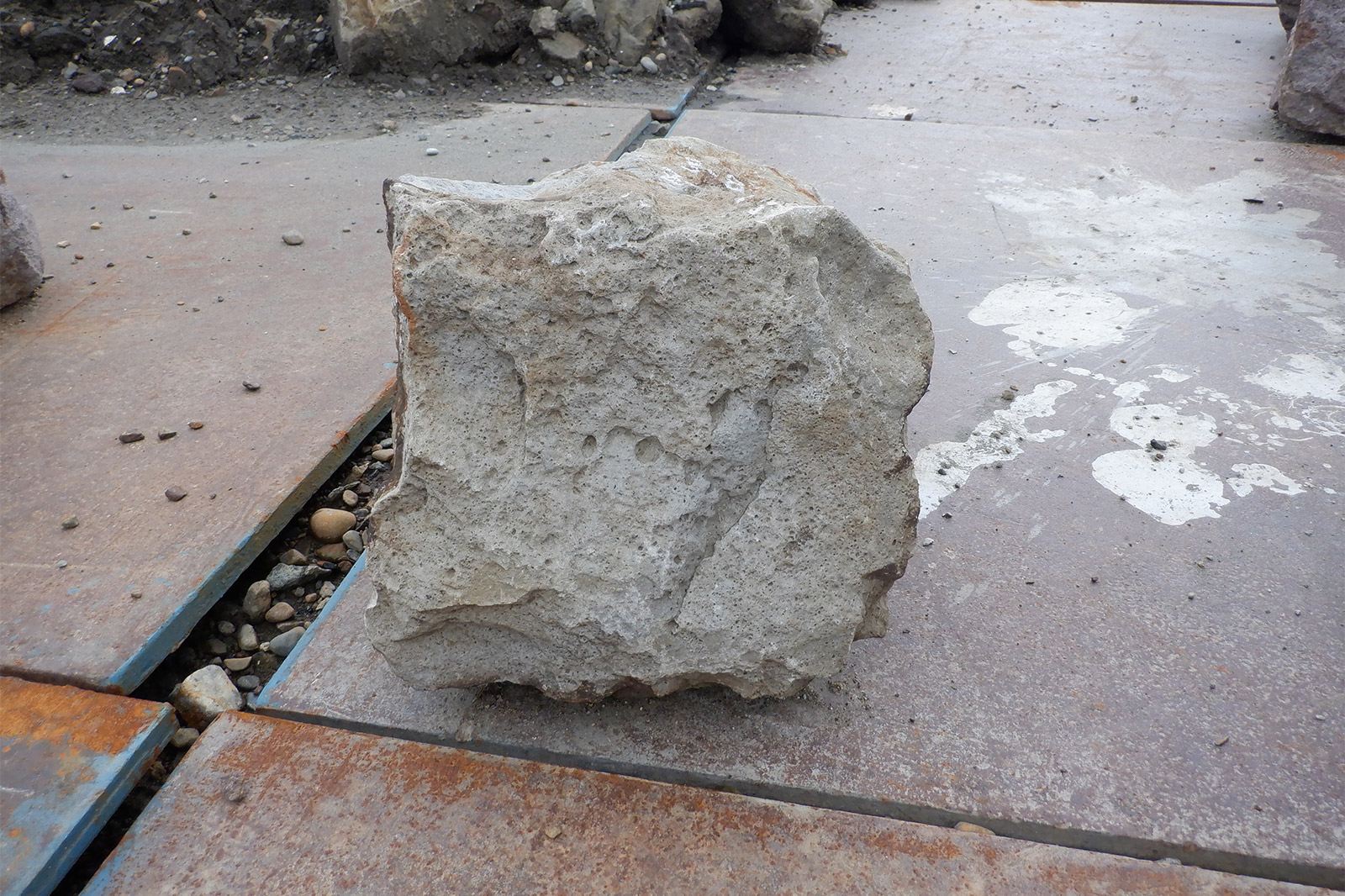
The exhibition space is composed of structures that mimic a part of Takanawa Embankment, as well asstones and pine piles that were actually used in Takanawa Embankment. The scenery of that time is brought back to life through both digital and analog means in the place where Japan's first railway ran approximately 150 years ago.
Yutaka Matsushige provides the narration for the video production.
The narration for the video production "Locomotives Running on the Sea" is provided by actor Yutaka Matsushige, who conveys the aspirations of the Meiji-era pioneers who envisioned laying railway tracks over the sea.
Another place to learn more about the "Takanawa Embankment"
The "THE FIRST RAILWAY Exhibition - The Beginning of the Railway -" is being held at THE LINKPILLAR 2 1F GALLERY in TAKANAWA GATEWAY CITY. The permanent exhibition features the history of the railway's opening, an introduction to the excavation of Takanawa Embankment, and interview videos with experts involved in the project.
Venue THE LINKPILLAR 2 | 1F GALLERY
<Gallery Hours> 10:00 - 19:00 (Last entry 18:45)
(Closed on the Closed)
< Admission > Free
Details:https://www.takanawagateway-city.com/thefirstrailway/
What is Takanawa Embankment?
Takanawa Embankment the site on which Japan's first railway ran.
In 1869, during the Meiji Restoration, the government decided to construct a railway connecting Shinbashi and Yokohama. However, there was much opposition around Takanawa Beach, and construction stalled. This led to the idea of "building the tracks over the sea," and Takanawa Embankment was completed over what was then Tokyo Bay. (There are various theories.) This episode allows us to feel the spirit of our predecessors who pushed modernization forward through innovation.
Fusion of Western and Japanese technology
At Takanawa Embankment, British-made rails were laid on top of an embankment constructed using stonework techniques from castles dating back to the Edo period. Construction was carried out under the guidance of British engineer Edmund Morel, and despite the lack of construction vehicles and machinery at the time, the railway opened just two and a half years after the Meiji government's official decision.
Historical remains that tell the story of railways
The area around Takanawa Embankment was reclaimed from the end of the Meiji era to the Taisho era, and for a long time it had disappeared. In 2019, during the Shinagawa Station improvement work, remains that may be part of Takanawa Embankment were discovered, and investigations revealed that remnants of Takanawa Embankment still existed. In 2021, the "Former Shimbashi Station Site and TakanawaEmbankment Site" was designated a national historic site as an important historical site for understanding the history of the modernization of transportation in Japan and the civil engineering technology of the time.
Event
Creating a Future City in Harmony with Cultural Heritage: The Case of Takanawa Embankment
- Date and Time
-
SUN. November 1, 2026 14:30 – 15:30 *Doors open at 14:00
- place
-
Tatami
- Speakers
-
Kengo Kuma (architect), Shigeru Onoda (advisor, Railway Technical Research Institute), Hiroyuki Yoshimoto (East Japan Railway Company)
- Participation fee
-
free
*Numbered tickets will be distributed at Tatami from 12:00: First-come, first-served basis, 70 seats available.
- Hosted by
-
MoN Takanawa: The Museum of Narratives