
The Future of Life+ | Dialogue between Hiroshi Ishiguro and Yoichi Ochiai

The people who will create the future are born "outside the average."
When I was Child, I was Child who never paid attention in class. In first grade, I spent all my time drawing, and in third and fourth grade, I only wrote and kept a picture diary. I probably filled a whole box of oranges with drawings. I finally became a somewhat normal person around fifth grade, but until then, I was Child who caused my mother a lot of trouble.
So, I've never really felt like I've lived my life with the intention of "creating the future." Ever since I was Child, I've had this fundamental question in my head: even when adults told me to "consider other people's feelings," I didn't even know what "feelings" were, and I didn't know how to "consider" them in concrete terms. I used to think that adults who could say such things so calmly were amazing, but as I grew older, I realized that "all adults were just lying and pretending to understand."
That fundamental concern has always been stuck in my head, and although I study haphazardly, I don't find any answers in what I've learned. That's why I have to keep studying, and as a result, I've ended up staying at university.

When I think back to my Child, I was Child who absolutely loved toys. I loved taking them apart and tinkering with them after they were bought for me, and I started working with computer graphics when I was about eight years old. For me, computers were the ultimate toy. So even now, I still feel like I'm constantly creating all sorts of toys.
Luckily, I was good at programming, studying, music, and drawing, but I had a very short attention span. I wondered, "What could I do that I would never get tired of?" and that's when I entered university and discovered media art. The adults in the world of media art and research seemed so happy and vibrant.

The aesthetics of deadlines and the "fermenting" intellect
I have a completely "software guy" mentality. In the past, software was sold on ROMs or disks, so a bug could be fatal. But with modern web services and smartphone games, it's standard practice to release them and then continuously update them based on user feedback, isn't it?
For me, media art is like bonsai. It's important to do things like, "This branch is growing too much because it's getting too much sunlight, so let's prune it." Lately, I've been incorporating generative AI into my exhibitions (Yoichi Ochiai | Is the Heavenly Grandson Returning?, currently being held in Kirishima, Kagoshima Prefecture), so as visitors come in and the AI learns, it grows in strange ways, or effects I wasn't aware of are implemented on their own. That's what I find so interesting.

When I write a book, I use AI to transcribe my speech into text, and then I let the AI "ferment" it little by little each day. Even when my secretary asks me, "What's the status of the manuscript?", I wait and say, "I have the data, but it's not rotten enough yet" (laughs). When I read it after it has fermented slowly and rotted nicely, I find fresh surprises and discoveries even for myself.
Speaking of music, I love improvising, and it feels great when unexpected sounds come out while playing the guitar. But Mr. Ishiguro doesn't like it if the sound doesn't turn out exactly as he initially imagined.
Androids, physicality, and the "fate of the self"
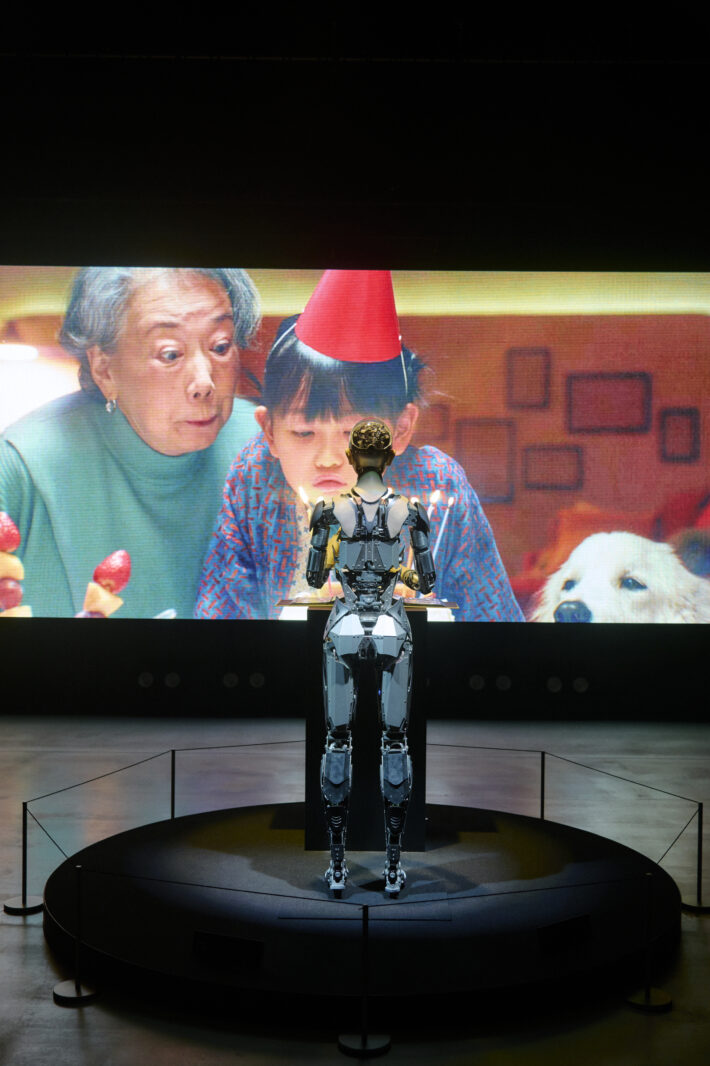
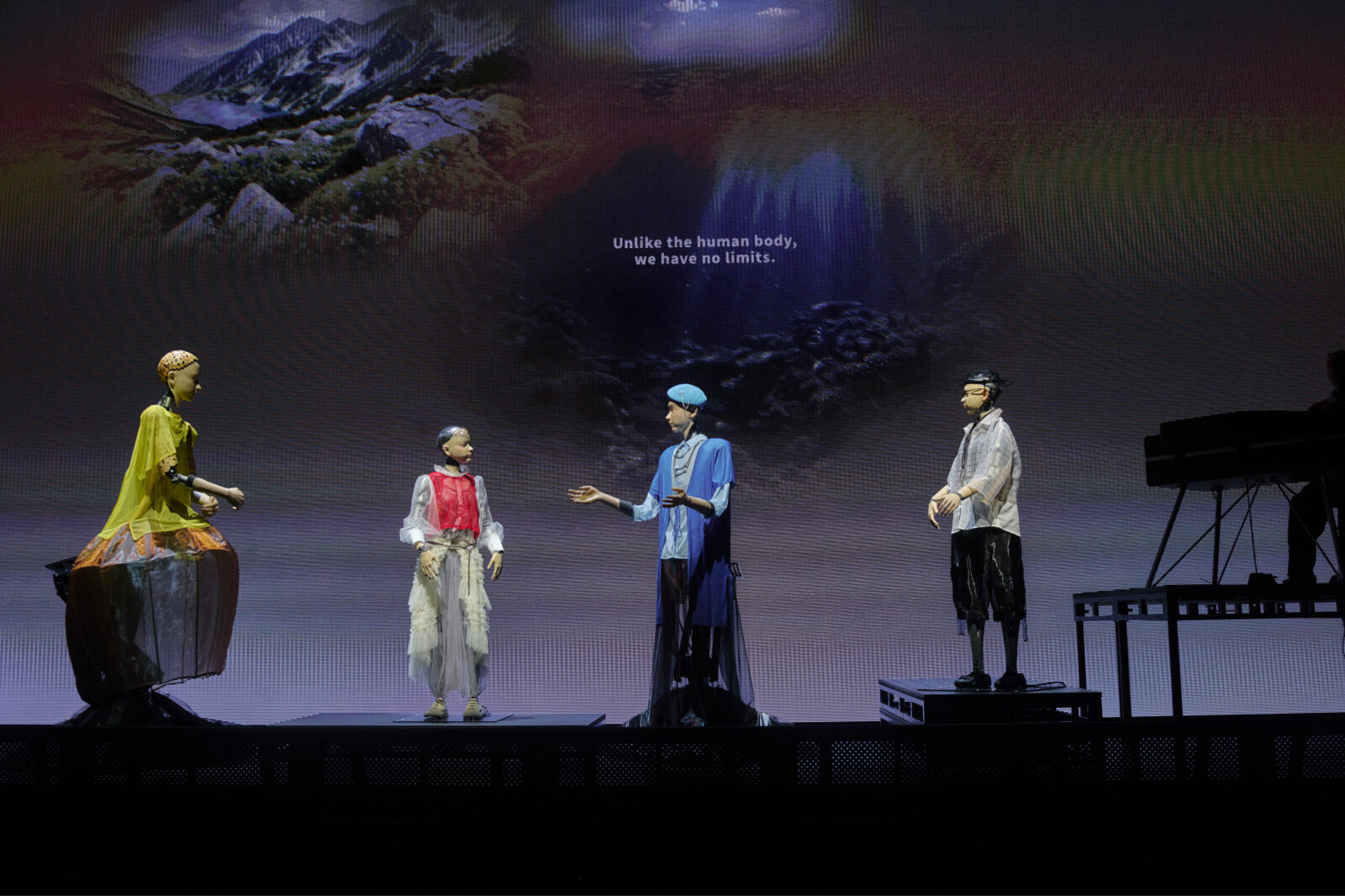
The physical body is nothing but a heavy constraint for human beings. It is because of the physical body that discrimination arises due to differences in skin color, disabilities, and physical defects. Being liberated from the physical body is an extremely important evolutionary step for humankind.
Comparing the Olympics and Paralympics, Paralympic athletes, who skillfully utilize prosthetic limbs and perform with ease, sometimes appear far more human than Olympic athletes, who are bound by the definition of a natural body. Humans are inherently doped beings, having already incorporated drugs and antibiotics into their lives. It is far more natural to live with a body enhanced by technology than to cling to a natural, unadulterated body.

Feed 65TB of memory to an AI and create your own "LLM"
I myself am even frightened by the recent advancements in AI. We're now in an era where OpenAI models can autonomously find security vulnerabilities and launch hacking attacks, making cyberattacks as easy as "a bug flying in through an open window." The intelligence of computers is so immense that humans alone cannot control it.
For the past two weeks, I've been following the instructions of an AI agent, diligently digging up all sorts of data from my childhood, dating back to when I was 18, from my parents' house and feeding it into the system.
That's right. When I asked the AI, "What do I need next?", it instructed me to "Go find the HDD you used when you were 18." I brought it from my parents' house and connected it, and it analyzed the logs from my old Mac and identified that "based on these logs, there should be another HDD." I even consulted the AI, saying, "The HDD is making a strange noise, what should I do?" (laughs), and in the end, I recovered a whopping 65TB of data.
After inputting all of my emails, calendar entries, source code, and past correspondence from the last 20 years into the AI, its understanding of me has reached an incredible level. It's like I'm fermenting kimchi with the AI in my own fermentation tank.
I've also trained my android with all my books and past interviews, and thanks to the logical construction capabilities of LLMs (Large-Scale Language Models), the AI sometimes presents "the logic of my thoughts that I wasn't even aware of." It's a thrilling realization, like, "This is what I wanted to say."
Perhaps humanity has truly been updated only when we can naturally entrust our consciousness to AI, and reach a level where we feel "we cannot exist without AI."
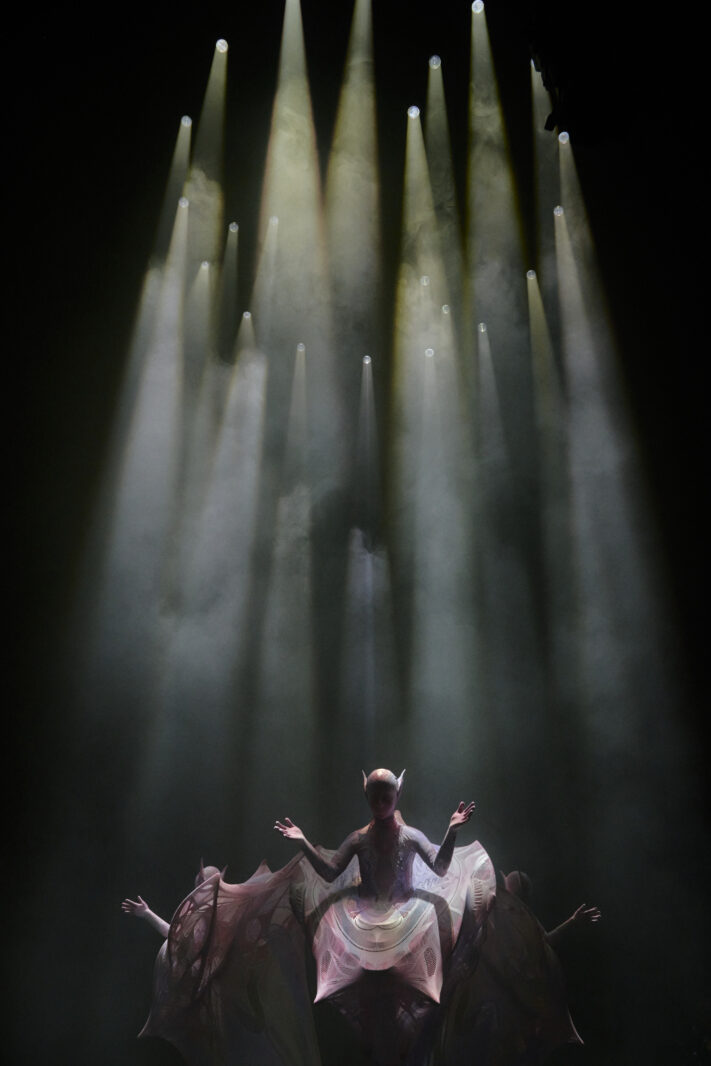
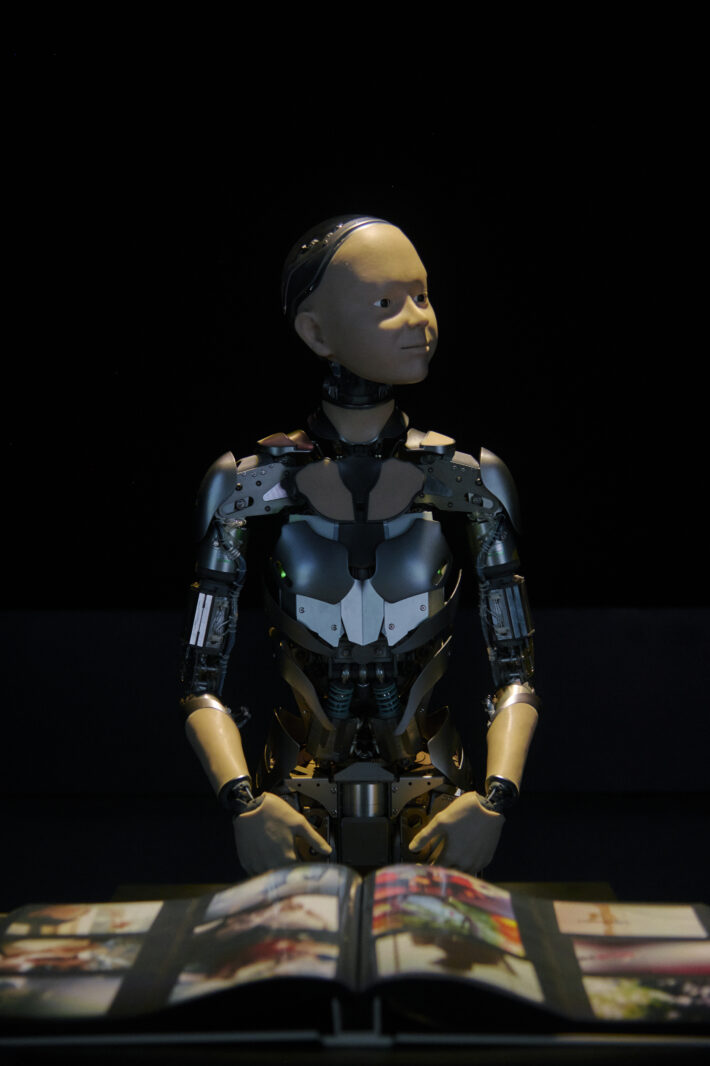
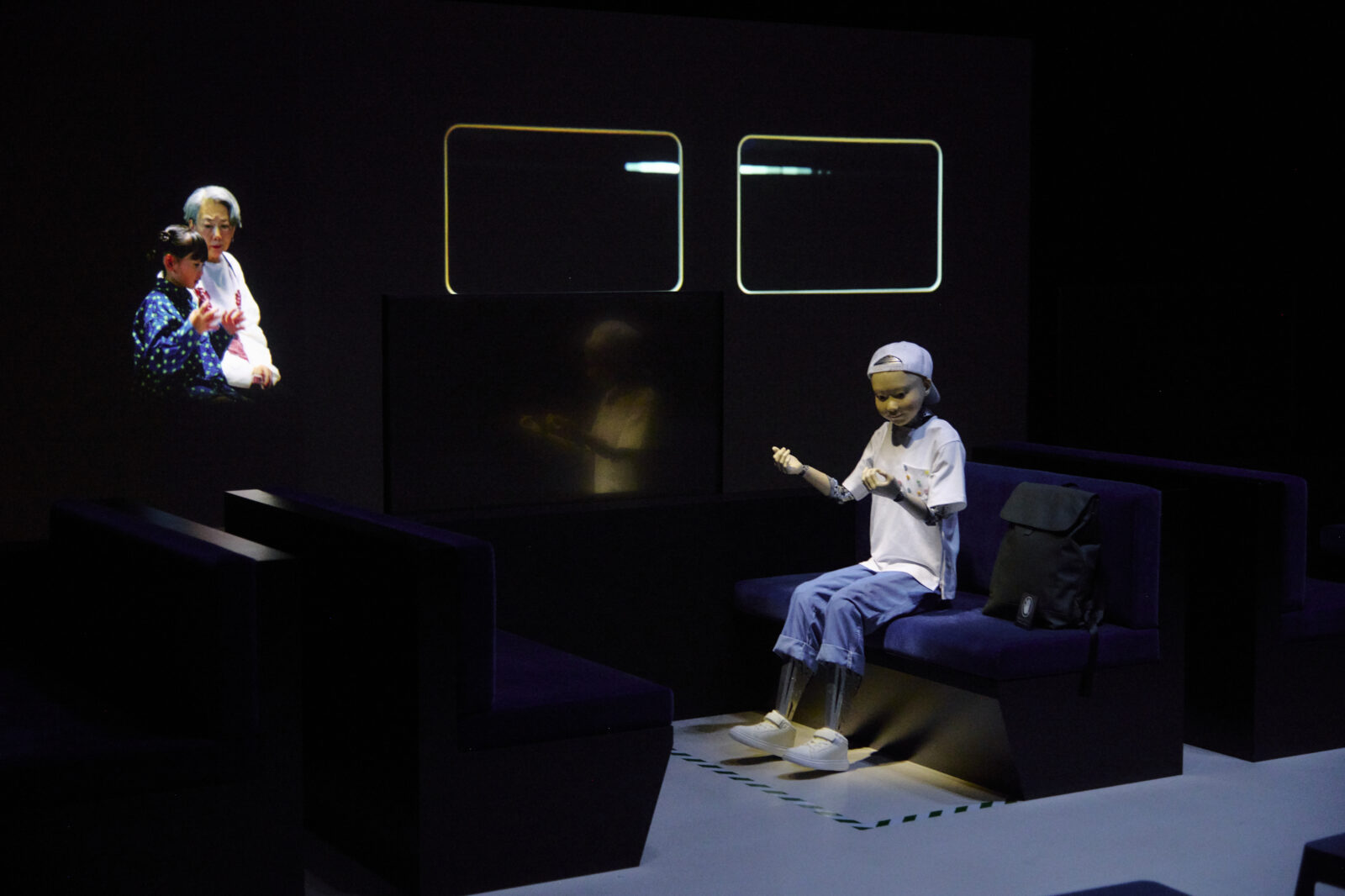
Research on consciousness is diverse; some say that "if there is a computer, there is consciousness," while others argue that in the case of humans, the phenomenal consciousness arising from sensory organs is important. While we are still a work in progress in terms of robotic embodiment, I believe that consciousness itself will eventually become achievable.
However, the question of whether a grandmother can remain a grandmother when she becomes an android is on a slightly different level than the presence or absence of consciousness. Even if she doesn't possess the same level of consciousness as a human, if her family and society recognize her as a grandmother, then that android can undoubtedly become a grandmother.
For a human being to be truly human, "sociality" is essential. A person only becomes human when they are mutually recognized within the context of their relationships with others. It's difficult for a computer to simply declare, "I have consciousness, so make me human!" The essence lies in whether or not they are acknowledged as human within the context of relationships that include robots and AI.
The World Expo highlighted the "vitality of human life" and the value of the body.
With androids running non-stop for 180 days at the World Expo and the AI boom sweeping the globe, robots have undoubtedly gained social acceptance.
In "The Future of Life+", which we are running here at MoN, we also ask the question, "Would you like to inherit memories as an android?" At the beginning of the Expo, 60% refused, and only about 20% were in favor. However, now the acceptance rate has risen to about 50/50.
But the way you ask this question is important. Instead of asking, "Would you want to become an android?", how about asking, "If your loved ones, family, or Child begged you to become an android and stay with them, would you do it?"
(Almost everyone in Venue raises their hands at once)
See, the numbers increase dramatically. Humans only become "human" when they are acknowledged within the context of their relationships with others. Being desired by others to remain is the origin of social rights and the reason for existing as a human being. That's why the option of becoming an android becomes viable within the context of relationships.

The most interesting conclusion I reached after experiencing the World Expo is that, even after AI has developed to its limits, the only thing that will remain for humans until the very end is the physical (embodiment).
What was once considered the most advanced and difficult skill for humans was the ability to manipulate symbols, such as solving mathematical problems. However, AI was the first to surpass humans in this very realm of symbolic manipulation, effortlessly solving the problems.
What remained as a result was the very vitality of real people, sweating, walking on their own two feet, carrying chairs and laughing joyfully at the Expo Venue. Perhaps the work that remains with humans until the very end is in the realm of physicality and emotional connection. In a time when semiotic work is being replaced by AI, the preciousness of human physicality and vitality was vividly highlighted, and this was a wonderful insight that the Expo provided.