Kitagawa
The message conveyed in your The signature pavilion, "The Future of Life," was very clear, wasn't it?
Ishiguro
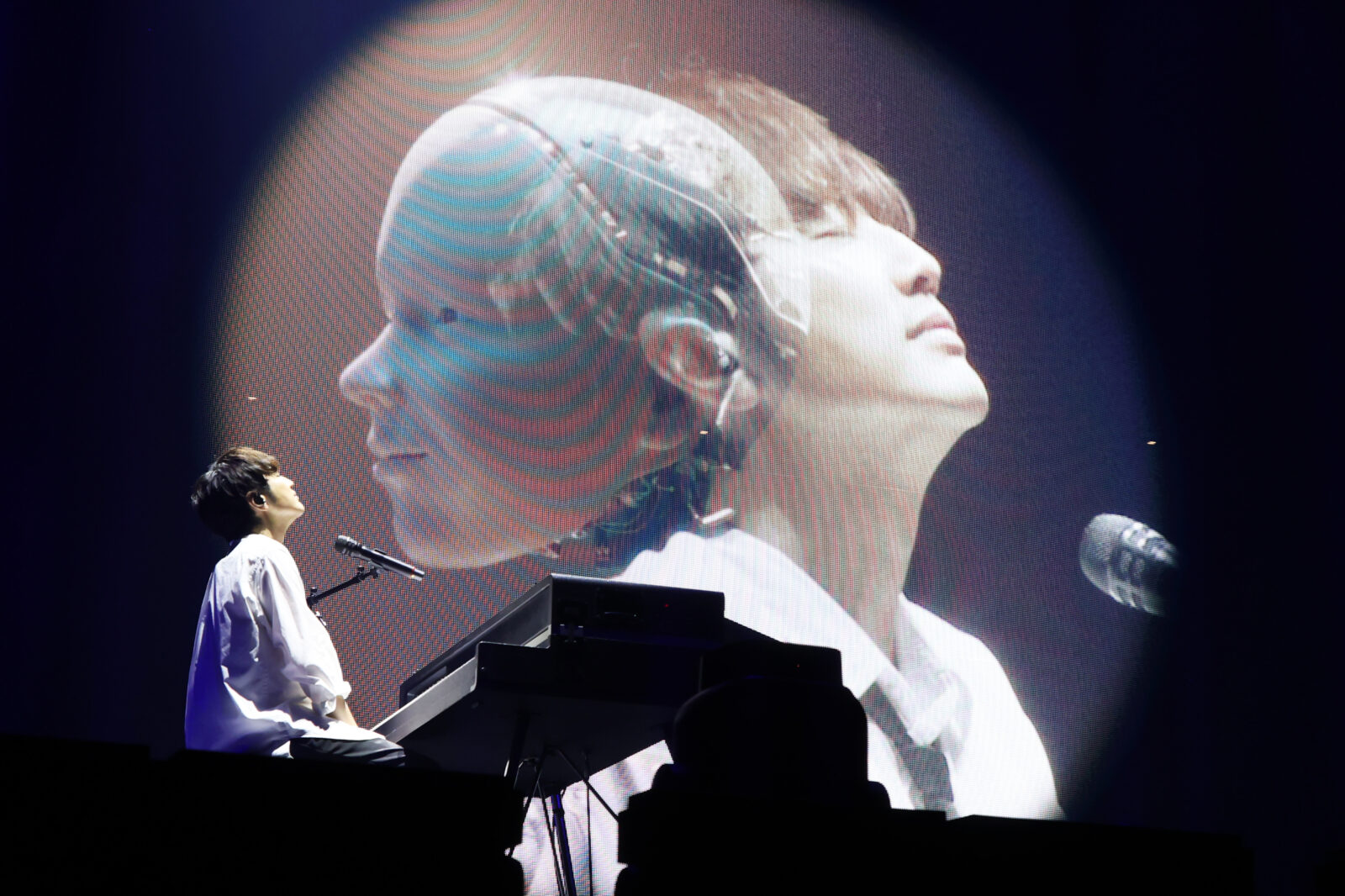
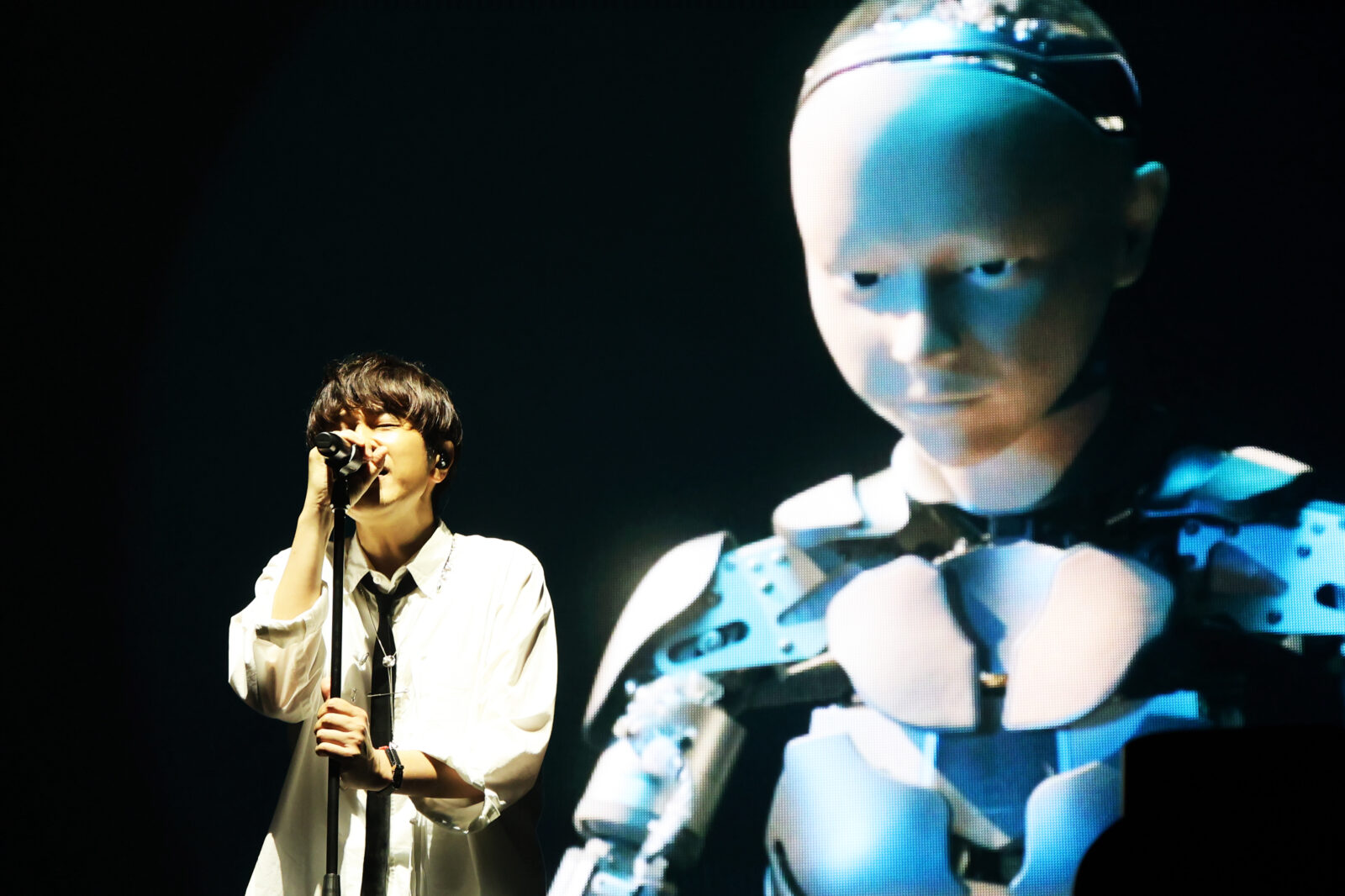
The argument is that "humans will become robots." As I wrote in the book "The Future of Life 2075: Humans Will Become Robots, and Robots Will Become Humans" (by Hiroshi Ishiguro, published by Nikkei Business Publications), the biggest hypothesis is that when the Earth was first formed, there was nothing there, and then life happened to come into being, and the most evolved form of life is humans, and before we knew it, humans were in a situation where they couldn't do anything without technology. In other words, we prospered up to a certain point without technology. So humans have two means of evolution: "genes" and "technology." But technology is far more expanding human capabilities. What this means is that living things may be trying to return to being non-living again. This is because the body made of protein of living things can only last about 150 years, no matter how hard we try to extend our lifespan. 150 years is too short to be active in the vast universe. So we have to evolve into something much newer—not mechanical life forms, but something like that. I think it could be said that humans, who are trying to replace various aspects of their abilities with technology, are essentially abandoning their current protein-based bodies and transforming into creatures with longer lifespans.
Kitagawa
I think that now is the time when corporate retirement systems and national pension systems need to be reviewed due to increased human longevity, but after listening to what you have to say, even those systems seem meaningless, and it makes me wonder if there is even an end to life.
Ishiguro
Life has an end. Everything has an end. But my hypothesis is that 100 or 150 years is too short a time. If the Earth is destroyed, everyone will perish, and there will be no humans left. But at that time, those who have bodies capable of going into space will be able to thrive somewhere else.
Kitagawa
The story was about having that choice right before your eyes, wasn't it? In other words, will you face the end as a flesh-and-blood human being as you approach death, or will you choose to live on longer as an android?
Ishiguro
That's right. The important point here is that androids won't be accepted by society unless they become human. The definition of what it means to be human is constantly changing from a medical standpoint, and there's no strict definition. But there are human rights, aren't there? Human rights are granted by society. So the only way to become human, or to become a living being, is to be recognized by society. And what's important in that scene is that the grandmother isn't saying she wants to become an android, but her granddaughter wants her grandmother to become an android. In short, there is a society that demands androids from the start. Just as humans become human because they are desired by humans, androids only become human when they are desired by humans.
Kitagawa
I see. You could also say this: an android cannot become human just because its grandchild wants it. There needs to be a society involved. In short, if it becomes something for a specific individual, that's a completely different story, isn't it?
Ishiguro
That's exactly the same as in human society, isn't it? After all, humans exist by interacting with many others within a society, and mutual recognition becomes important in that context.
Kitagawa
I don't know if it's related, but I'm involved in music, and there's this feeling that AI is somehow a threat. For example, if you order an AI to "create a new Beatles song" with various conditions, it will produce a song that sounds similar, right? I've been thinking a lot lately about how we should define the boundary between human creativity and AI.
Ishiguro
I hear that kind of talk a lot. For example, if we take shogi (Japanese chess) as an example, I think it's safe to say that no one can beat AI anymore. But people still play shogi, and they get excited watching professional shogi matches, right? It's the same thing. Because humans live to interact with others, and within that, there are things that are enhanced by AI and things that aren't. So, from my perspective, I don't understand why we distinguish between AI and humans. After all, smartphones and humans are already one and the same, aren't they? So I think it would be fine to have a society where we accept and communicate with AI from the beginning.
Kitagawa
However, while we acknowledge the existence of AI, we are also faced with the question of how we should approach creative work.
Ishiguro
I think the approach is different. With AI, you can create an average song that many people will like from a vast amount of data, but creating something specifically for a person is something only that individual can do.
Kitagawa
I see, that makes sense. It's quite common to target specific individuals, groups, or regions, and then have that approach spread to a wider audience. In fact, you could even say that's what creativity is all about.
Ishiguro
We are going to become even more diverse in the future. AI won't make us homogeneous (uniform); it will make us more diverse. Many more values will emerge, and various values will be accepted. As a result, communication will become more diverse, and songs won't be good just because they sell a lot worldwide; the way they sell and spread will become more diverse. I think that's what makes for a better society. It's more dangerous if the same songs are listened to all over the world.
Kitagawa
Yuzu started out on the streets, so their origins lie in how to deliver their songs to the people right in front of them. At first glance, the advancement of AI and the widespread adoption of subscriptions might seem far removed from those origins, but in reality, I feel like we're returning to our roots, or rather, getting closer to them.
Ishiguro
I still believe that the foundation of communication is empathy. Is it really possible to create an average song that resonates with people all over the world? I think even AI probably can't do that. It's impossible to connect the whole world with just one song. The human world is made up of a chain of empathy, so even if AI were to create an amazing song, the power of a song sung for someone else will never disappear, and I don't think that kind of thing will ever go away.